1

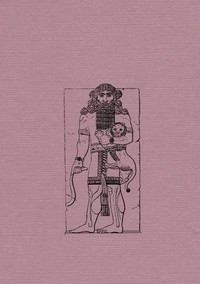
The Chaldean account of Genesis — A Reader’s Guide
(0 User reviews)
433
Project Gutenberg
2019
Not confirmed
Cosmogony, Babylonian; Mythology, Assyro-Babylonian; Bible. Genesis -- Criticism, interpretation, etc.
Readers of public-domain and historical texts
Project Gutenberg digital edition
en
Edition facts
Words
75,276
Reading time
328 min
Text sections
25
The Chaldean account of Genesis — A Reader’s Guide can be approached with a clearer sense of reading commitment from its source measurements: 75,276 words, 5 hr 28 min estimated reading time, and 25 detected text sections.
The text analysis averages about 13.8 words per sentence, while the detected sections provide another way to judge how the source is divided.
Project Gutenberg metadata also associates the work with “Cosmogony, Babylonian,” connecting these edition facts with the source record’s subject description.
Source:
Project Gutenberg record #60559
George Smith's pioneering 1876 work presents cuneiform translations of Babylonian creation, flood, and tower narratives, edited by A. H. Sayce with updated scholarship. The text juxtaposes fragmentary tablet readings with biblical parallels, focusing on linguistic and mythological connections rather than theological argument.
Read the complete public-domain text at its original source.
Read on Project GutenbergGeorge Smith's The Chaldean Account of Genesis opens with a striking editorial preface by A. H. Sayce, who notes that the volume “awakened extreme interest and curiosity” upon its 1876 publication. The work does not argue for or against biblical authority; instead, it lays out cuneiform tablets as parallel accounts, often in fragmentary form, and lets the reader observe the linguistic and narrative overlaps. Smith’s method is philological: he tracks the recurrence of specific words—such as the Babylonian bâlal (“to confound”) matching the Hebrew verb in Genesis 11—and treats the tablets as material evidence of a shared ancient storytelling tradition.
Fragmentary Tablets and Editorial Caution
The book’s most distinctive feature is its frank presentation of damaged sources. Smith repeatedly describes tablets as “shockingly mutilated” or “so remarkable that it is most unfortunate we have not the remainder.” He does not pretend to completeness. For the Tower of Babel narrative, he offers only a few columns of broken text: Column I begins with “them the father” and “the thought of his heart was evil,” then shifts abruptly to a god confounding builders “on the mound.” Smith notes that the fragment “was preceded by at least one tablet” now lost. This honesty about lacunae gives the reader a sense of working alongside the decipherer, piecing together meaning from clay shards.
The Babylonian Deluge and Verbal Echoes
Smith’s treatment of the flood story centers on the eleventh tablet of the Gilgamesh epic, which he calls “the Chaldean account of the Deluge.” He highlights specific verbal parallels: the Babylonian hero is told to “build a ship” and “take seed of life of every kind,” phrases that resonate with Genesis 6–9. But Smith also dwells on differences—the Babylonian ark is a cube, the hero is a king, and the gods themselves are frightened by the storm. He translates the goddess Ishtar’s lament: “like the spawn of fishes they fill the sea,” a line with no biblical equivalent. By foregrounding such details, Smith lets the Babylonian version retain its own mythological texture rather than forcing it into a biblical mold.
The Tower of Babel: Polytheistic Origins
Smith’s analysis of the tower fragment emphasizes its polytheistic framework. The god Anu is called “Sar-tuli-elli,” or “king of the illustrious mound,” and the builders are punished because their “heart was evil” against the gods. Smith draws a direct line to Greek mythology: “like the giants and Titans in Greek mythology, whose assault on Zeus is probably but an echo of the old Babylonian tale.” He notes that the Babylonian verb for “confound” is the same root as the Hebrew bâlal, but the context is entirely different—here, the gods act as a pantheon, not a single deity. The fragment includes a goddess Dav-kina and a line “they weep hot tears for Babylon,” suggesting a narrative of divine regret absent from Genesis.
Sayce’s Revisions and the Progress of Scholarship
Editor A. H. Sayce’s preface and footnotes form a second layer of the book. He writes that “the five years that have elapsed since the publication… have been five years of active work and progress among Assyrian scholars,” and he updates Smith’s readings with newer research. Sayce points out where Smith’s translations have been superseded, for instance by “the labours of men like Oppert, Lenormant and Guyard.” This editorial apparatus turns the volume into a document of scholarly evolution: the reader sees not only the ancient texts but also the shifting interpretations of the 1870s and 1880s. Sayce’s tone is respectful but corrective, making the book a record of how Assyriology matured.
Readers approaching The Chaldean Account of Genesis should expect a work of comparative philology, not a devotional or polemical text. The value lies in watching Smith and Sayce wrestle with broken tablets, uncertain readings, and the temptation to harmonize Babylonian and Hebrew stories. Pay attention to the footnotes: they reveal where later scholarship revised Smith’s initial conclusions. The book is best read as a primary source in the history of archaeology—a snapshot of how Victorian scholars first encountered Mesopotamia’s literary heritage.
Sitting with George Smith’s cuneiform fragments, I found myself thinking how each civilization reshapes older whispers into its own voice. That quiet layering reminded me of another record of transformation, New Ideas in India During the Nineteenth Century A Study of Social, Political, and Religious Developments — Context and Discussion, where old traditions likewise met new pressures. Both felt less like arguments and more like patient archaeology of belief.
There are no reviews for this eBook.
There are no comments for this eBook.
Reader reflection
Your personal reading reflection
Build a private reading journal entry for this title.
Your progress
0
/
10
2
Was reading this book enjoyable?
3
Would you encourage someone else to read it?
4
How much effort did this book require?
5
How strongly did the book affect you emotionally?
6
How would you describe its reading pace?
7
Could you follow the author’s main argument?
8
Which element worked best for you?
9
What is the main idea you are taking away?
10