1

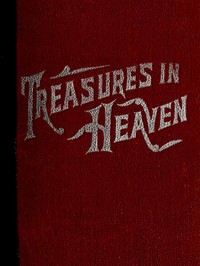
Treasures in Heaven Fifteenth Book of the Faith Promoting Series, Designed for the Instruction and Encouragement of Young Latter-day Saints — A Reader’s Guide
(0 User reviews)
352
Project Gutenberg
2015
Not confirmed
Eskildz, Niels P. L., 1836-; Lambert, Mary Alice Cannon, 1828-; Service (Theology)
Readers of public-domain and historical texts
Project Gutenberg digital edition
en
Edition facts
Words
31,594
Reading time
138 min
Text sections
4
For Treasures in Heaven Fifteenth Book of the Faith Promoting Series, Designed for the Instruction and Encouragement of Young Latter-day Saints — A Reader’s Guide, the stored edition analysis reports 31,594 words, 2 hr 18 min estimated reading time, and 4 detected text sections.
The text analysis averages about 28.6 words per sentence, while the detected sections provide another way to judge how the source is divided.
Project Gutenberg metadata also associates the work with “Eskildz, Niels P. L., 1836-,” connecting these edition facts with the source record’s subject description.
Source:
Project Gutenberg record #49830
This 1914 compilation of firsthand accounts and editorial reflections focuses on Latter-day Saint temple work, genealogical research, and the principle of unselfish service, using specific examples like Carolina Corradi's proxy ordinances for nearly 1,900 ancestors.
Read the complete public-domain text at its original source.
Read on Project GutenbergThe volume opens with a letter from compiler George C. Lambert to the First Presidency, requesting sanction to resume the Faith Promoting Series after a thirty-year hiatus. The reply, signed by Joseph F. Smith, Anthon H. Lund, and Charles W. Penrose, appoints a committee to read the manuscript. This framing establishes the work as an officially approved collection intended for the instruction and encouragement of young Latter-day Saints, priced at twenty-five cents per volume. The preface immediately anchors the book in the Savior's teaching that those who labor solely for worldly things “have their reward,” setting a doctrinal lens for the narratives that follow.
A Compiler’s Purpose and the Structure of Example
The preface and opening correspondence reveal Lambert’s dual aim: to resume a popular series and to produce volumes that “subserve the interests of the Church.” The first volume, Treasures in Heaven, is described as relating to temple work, while a second, Choice Memories, would contain varied incidents. This explicit categorization suggests the book is organized thematically rather than chronologically. Readers should expect each chapter to present a distinct case study—such as the detailed account of Carolina Corradi—rather than a continuous argument. The preface’s emphasis on unselfish service as the Savior’s “most frequently and thoroughly impressed” lesson signals that each narrative will be evaluated by that standard.
Carolina Corradi: A Portrait of Filial Devotion
The excerpt concerning Carolina Corradi offers the most extended example in the provided text. She earned $2.00 per day as a seamstress, employed a genealogist to trace her ancestors, and hired Brother Eskildz to perform proxy ordinances for male kindred while she worked for female kindred. The account states she had done or caused work for “almost 1800” names, aiming for 1900. Notably, she “did not know, and she did not care to know” how much money she had spent. The narrator describes her as “the personification of self-sacrifice and filial devotion.” This portrait emphasizes meticulous record-keeping—no names duplicated or omitted—and a reluctance to seek notoriety, aligning with the preface’s critique of seeking praise.
Wealth as a Spiritual Handicap
A section titled “An Exception. A Rich Man’s Handicap” directly addresses the tension between wealth and salvation. It cites Matthew’s gospel: “a rich man shall hardly enter the kingdom of heaven.” The text argues that wealth is “more frequently a bar to the service of the Lord than a help,” countering the assumption that the wealthy would be more generous. The heading promises a “typical case of a man reared in affluence” and his “unpromising start in married life,” followed by how he became interested in temple work. This structure suggests the book uses contrasting examples—Corradi’s modest means versus this man’s affluence—to illustrate that spiritual worth is independent of material resources.
Reading the Excerpts as a First-Time Reader
The provided excerpts are front matter and two narrative segments, leaving the middle and later portions unknown. A first reader should note that the book’s didactic purpose is explicit: each story is meant to promote faith and encourage temple work. The compiler’s voice is present in editorial comments, such as the closing praise of Corradi. The narratives are detailed but selective, focusing on measurable outcomes (number of ordinances, cost, genealogical records) and emotional rewards (“great joy and satisfaction”). Readers may find that the book’s effectiveness lies in the cumulative weight of these examples rather than in any single dramatic arc.
As you read, attend to how each narrative balances practical detail—dollars spent, names recorded—with spiritual assurance. The compiler’s introductions and conclusions often frame the moral, so watch for those signposts. The book is best approached as a series of discrete testimonies rather than a continuous story; its power emerges from the repetition of faithful labor across varied circumstances.
Some evenings, reading about Carolina Corradi’s quiet, unbroken labor for her nineteen hundred ancestors, I keep thinking of another little book—A Little Catechism; With Little Verses and Little Sayings for Little Children — Reading Notes. Both feel like small, patient gatherings rather than grand statements. Perhaps love simply shows itself in what we faithfully gather, over and over.
There are no reviews for this eBook.
There are no comments for this eBook.
Reader reflection
How did this book work for you?
Your answers remain private and are stored only in this browser.
Your progress
0
/
10
2
Was reading this book enjoyable?
3
Would you recommend this book to another reader?
4
How much effort did this book require?
5
How would you describe its reading pace?
6
Was the book easy to understand?
7
Did you gain anything practical from the text?
8
How would you rate its originality?
9
Which lesson or insight stayed with you?
10