
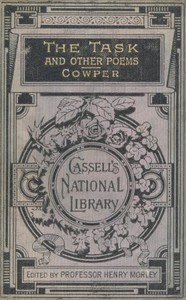
The Task, and Other Poems by William Cowper
If you're picturing a dusty old book of rhyming couplets about Greek gods, think again. William Cowper's The Task is a six-book poem that starts, famously, with a sofa and spirals out to cover... well, everything. Written at the urging of a friend, Cowper uses the simple 'task' of describing a sofa to launch into a sprawling, personal tour of his world. We walk with him through snowy landscapes, sit with him by the fireside, and follow his thoughts as they jump from criticizing city life and politics to praising the simple comforts of home, his garden, and his pet hares.
The Story
There isn't a plot in the traditional sense. Instead, it's the story of a mind in motion. Cowper invites you into his countryside retreat and shares his observations. One minute he's vividly painting a scene of a postman struggling through a winter storm, the next he's ranting (with great wit) about the noise and corruption of London, and then he's reflecting with tender sadness on his own bouts of melancholy. The 'story' is his journey toward contentment. He finds heroes in everyday resilience and God in the details of nature. Other poems in the collection, like the heartbreaking 'On the Receipt of My Mother's Picture,' add deeper layers, showing a man grappling with memory, loss, and faith.
Why You Should Read It
I love this book because Cowper feels like a real person. His voice is conversational, sometimes wry, sometimes deeply vulnerable. He's not a poet on a pedestal; he's a guy trying to make sense of life's ups and downs. When he describes the 'divine tobacco' of his evening pipe or the cozy safety of a sheltered garden, you feel it. His struggle with mental illness is handled with a clarity that bypasses centuries. He doesn't use clinical terms; he talks about the 'the fearful dark' of his mind. Reading him, you realize that the human heart's core anxieties and joys haven't changed a bit. It's comforting, in a strange way.
Final Verdict
This is a perfect book for anyone who thinks classic poetry isn't for them. It's for readers who enjoy thoughtful walks, good conversation, and memoirs that explore inner life. If you like the personal essays of someone like Montaigne or the nature reflections of Thoreau, but prefer yours with a warm, 18th-century British charm and a great cup of tea, you'll find a friend in Cowper. It’s not a quick read, but a slow, rewarding one—best enjoyed a few pages at a time, perhaps by a window.
You are viewing a work that belongs to the global public domain. It serves as a testament to our shared literary heritage.





Logan Nguyen
1 year agoAfter finishing this book, it manages to explain difficult concepts in plain English. A true masterpiece.