
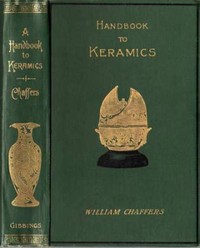
The Collector's Handbook to Keramics of the Renaissance and Modern Periods
Let's be clear from the start: this isn't a novel. There's no protagonist chasing a villain. Instead, the 'story' is the centuries-long adventure of pottery itself. William Chaffers acts as your guide on a tour through time, starting with the rebirth of fine ceramics in the Renaissance and following it right up to the fancy porcelain being made in his own Victorian era.
The Story
Chaffers lays out the history like a map. He shows you how styles changed from country to country, from the bold colors of Italian majolica to the delicate blue-and-white scenes from China that Europe went crazy for. But the real plot twist is forgery. As certain old pieces became valuable, people started making fakes. A huge part of the book is Chaffers teaching you how to be a ceramic detective. He breaks down the 'fingerprints' of pottery: the specific marks factories used, the way clay feels, the chemistry of glazes, and the shapes that were popular in different decades. The drama is in learning to see these clues.
Why You Should Read It
What makes this old book so engaging is Chaffers' voice. You can feel his passion. He gets genuinely annoyed by bad forgeries and excited when he explains a clever way to spot one. Reading it, you start to see everyday objects differently. That cup on your shelf has a whole hidden history in its shape and glaze. It connects you to the craftspeople, the traders, and even the tricksters of the past. It’s less about memorizing facts and more about gaining a superpower—the ability to see the story in the stuff around us.
Final Verdict
This book is perfect for history buffs who love 'how-to' manuals, antique collectors (or aspiring ones), and anyone who enjoys shows about picking or restoration. If you like the idea of holding a piece of the past in your hands and knowing its secrets, Chaffers is your man. Just be warned: after reading it, you might start eyeing your grandma's old dishes a little too carefully.
This is a copyright-free edition. Use this text in your own projects freely.
Donald Martin
7 months agoAmazing book.
Sandra Young
6 months agoFast paced, good book.






Christopher Ramirez
1 year agoAfter finishing this book, it creates a vivid world that you simply do not want to leave. I couldn't put it down.