
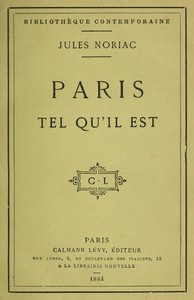
Paris tel qu'il est by Jules Noriac
Published in 1867, right in the middle of Napoleon III's massive overhaul of the city, 'Paris tel qu'il est' feels like an act of rebellion. Baron Haussmann was busy creating the Paris we know today—wide avenues, grand buildings, and modern sewers. Noriac, a journalist and playwright, wasn't impressed. He saw a city losing its soul, its quirky character being paved over.
The Story
There isn't a single plot, but a series of vivid, street-level scenes. Think of it as a collection of documentary snapshots. One chapter might follow a struggling writer in a garret, the next might eavesdrop on market vendors at Les Halles, and another could plunge you into the lively chaos of a public dance hall. Noriac walks you through neighborhoods slated for demolition, introduces you to street urchins and laundresses, and paints a picture of daily life with all its hardships and small joys. The 'story' is the city itself—its rhythm, its sounds, its smells, and the incredible variety of people trying to make a life there, far from the eyes of tourists and dignitaries.
Why You Should Read It
This book is a gift because it's so human. History books give you dates and edicts; Noriac gives you the gossip, the frustration, and the warmth. You feel the chill of a poorly heated apartment and the thrill of a cheap theater show. His writing is sharp, witty, and often sarcastic. He's not a romantic praising the 'picturesque' poverty; he's a realist showing you the resilience and humor of ordinary people. Reading it, you realize that the debate about a city changing too fast, about losing its identity to progress, is over 150 years old. It makes our modern worries feel connected to a much longer story.
Final Verdict
Perfect for history lovers who are tired of kings and battles, and for anyone obsessed with Paris beyond the Eiffel Tower. If you enjoyed the gritty details of books like 'Les Misérables' but want non-fiction, or if you're a fan of urban exploration and psychogeography, Noriac is your 19th-century prototype. It’s also a great pick for writers or creators looking for raw, sensory detail about a past world. A word of caution: it's not a breezy novel. It's a detailed, observational piece. But if you let Noriac be your guide, you'll come away feeling like you didn't just read about 1860s Paris—you visited it.
This historical work is free of copyright protections. Enjoy reading and sharing without restrictions.





Dorothy Harris
6 months agoMy professor recommended this, and I see why.