
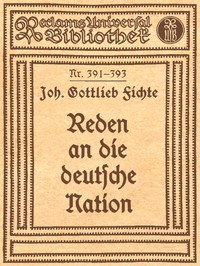
Reden an die deutsche Nation by Johann Gottlieb Fichte
Okay, let's set the scene. It's 1808. Napoleon's armies have crushed Prussia. Berlin is occupied by French troops. Into this atmosphere of utter defeat walks philosopher Johann Gottlieb Fichte. He gives a series of fourteen public lectures, later published as Reden an die deutsche Nation (Addresses to the German Nation). This isn't a story with characters and a plot in the usual sense. The 'story' is the argument itself, unfolding week by week, trying to rewrite a national identity in real time.
The Story
Fichte starts with a brutal truth: the old Germany is gone. The political structures have failed. But, he argues, this is actually an opportunity. He says the German 'nation' was never really about kings or states. Instead, it's a spiritual and cultural community defined by its language and a unique love for freedom and original thought. The core of his plan? A complete overhaul of education. He imagines a state-run system that would mold children into citizens devoted to the community and moral good, creating a new kind of person and, from them, a new, unified Germany strong enough to throw off foreign rule.
Why You Should Read It
Reading this is a trip. You can feel the urgency in every sentence. It's part philosophy, part political manifesto, and part halftime locker room speech for an entire civilization. Fichte's ideas are explosive. He connects individual freedom directly to national identity and collective purpose in a way that feels both inspiring and, knowing what came later in European history, deeply unsettling. It's the raw blueprint for cultural nationalism. You're not just learning about an idea; you're watching it being forged under immense pressure.
Final Verdict
This book is perfect for history buffs, political science readers, or anyone fascinated by how ideas change the world. It's not an easy beach read—you have to wrestle with some dense 19th-century German idealism. But if you want to understand the powerful, often dangerous, stories nations tell themselves about who they are, this is essential reading. It shows how hope and identity can be rebuilt from the ashes, and forces you to ask tough questions about community, education, and where true patriotism begins and ends.
This book is widely considered to be in the public domain. It is available for public use and education.
Ava Jones
1 year agoI came across this while browsing and the author's voice is distinct and makes complex topics easy to digest. I would gladly recommend this title.
Logan Martin
1 year agoSolid story.




Anthony Lewis
1 year agoI started reading out of curiosity and the content flows smoothly from one chapter to the next. Exceeded all my expectations.