
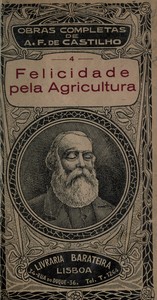
Felicidade pela Agricultura (Vol. I) by Antonio Feliciano de Castilho
Published in the mid-1800s, Antonio Feliciano de Castilho's Felicidade pela Agricultura is a book that defies easy categorization. It's part philosophy, part practical guide, and part love letter to the Portuguese countryside. Castilho, a respected literary figure of his time, uses his skill with words not for poetry or fiction here, but to paint a compelling picture of an agrarian life.
The Story
There isn't a traditional plot with characters and a climax. Instead, Castilho builds his case chapter by chapter. He starts by questioning the popular pursuits of his era—wealth, social climbing, urban living—and finds them lacking. He then turns to the land. He walks the reader through the seasons on a farm, not just as a series of chores, but as a source of profound lessons. He talks about the patience required, the direct connection between effort and reward, and the deep peace found in nature's cycles. The 'story' is the journey of an idea: that digging in the dirt might be the best way to cultivate a happy soul.
Why You Should Read It
I'll be honest, I didn't expect to be so charmed. In our world of digital noise and burnout, Castilho's arguments feel weirdly fresh. His prose is clear and often beautiful, even in translation. When he describes the satisfaction of a harvested field or the simple quiet of a rural morning, it resonates. This book slowed my brain down. It's not a call for everyone to become a farmer, but a powerful reminder to find the 'agriculture' in our own lives—the tangible, grounding projects that connect us to something real and growing. It made me appreciate my small garden on my balcony in a whole new way.
Final Verdict
This is a special book for a specific mood. It's perfect for anyone feeling adrift in modern life, for lovers of nature writing, or for readers curious about 19th-century European thought. If you enjoy the reflective spirit of writers like Henry David Thoreau or Wendell Berry, you'll find a kindred spirit in Castilho. It's not a page-turning thriller; it's a thoughtful companion. Keep a cup of tea nearby, read a chapter at a time, and let its old-world wisdom gently challenge your idea of where happiness grows.
This text is dedicated to the public domain. It is available for public use and education.
Donald Clark
2 months agoHelped me clear up some confusion on the topic.
Brian Smith
6 months agoBeautifully written.
Jessica Martin
1 year agoHelped me clear up some confusion on the topic.
Joseph Young
1 year agoVery helpful, thanks.







Charles Jackson
9 months agoSimply put, the flow of the text seems very fluid. I couldn't put it down.