
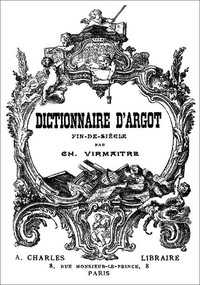
Dictionnaire d'argot fin-de-siècle by Charles Virmaître
Okay, let's be clear from the start: this isn't a book you read cover-to-cover like a thriller. Charles Virmaître's 'Dictionnaire d'argot fin-de-siècle' is a time capsule disguised as a dictionary. Published in the 1890s, it's a collection of slang terms from the end of the 19th century in France, specifically Paris. Virmaître, a journalist with a sharp ear for the street, compiled thousands of words and phrases that you'd never find in a standard French dictionary.
The Story
There's no traditional plot. Instead, the 'story' is the portrait of a society that emerges from these entries. You open it to any page and get a direct line to the voices of the past. Look up the word for 'head' and you'll find a dozen slang terms, from 'la balle' (the ball) to 'la cafetière' (the coffee pot). Each entry is a tiny story. You learn that 'avoir le sac' (to have the bag) meant to be rich, and that 'dab' was slang for a skilled thief. The book is organized alphabetically, but it reads like a series of chaotic, vibrant vignettes from dance halls, prisons, markets, and newspapers. It’s the linguistic underbelly of the Belle Époque.
Why You Should Read It
I love this book because it makes history feel alive and messy. Textbooks give you dates and treaties; Virmaître gives you the jokes, the insults, and the shorthand of people just living their lives. It’s incredibly human. You see the creativity and humor of a culture under pressure—the playful ways people talked about money, sex, danger, and authority. It also shows how language is a living thing, constantly evolving to serve those who use it. Reading it, you realize that the 'cool' slang of today serves the exact same purpose as the 'argot' of the 1890s: it creates community, excludes outsiders, and adds color to daily life. It’s a powerful reminder that the past wasn't silent or overly formal; it was loud, rude, and brilliantly inventive.
Final Verdict
This is a niche book, but a fantastic one for the right reader. It's perfect for history nerds who want to go beyond kings and battles, for language lovers obsessed with how words evolve, and for writers looking to add authentic grit to a historical setting. If you're a casual reader looking for a straight narrative, this might feel like homework. But if you've ever been curious about the real sound of a bygone era, dip into Virmaître. Keep it on your shelf, flip it open now and then, and let the voices of 19th-century Paris pull you into their world, one slang word at a time.
This title is part of the public domain archive. Thank you for supporting open literature.
Paul White
1 year agoCitation worthy content.
Barbara Robinson
1 year agoRead this on my tablet, looks great.








Donald Harris
1 month agoFinally found time to read this!