
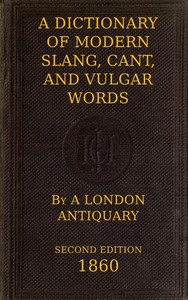
A Dictionary of Slang, Cant, and Vulgar Words by John Camden Hotten
Let's be clear from the start: this isn't a novel. You won't find a plot with heroes and villains. Instead, A Dictionary of Slang, Cant, and Vulgar Words is a different kind of adventure. Think of it as a time machine for your ears. John Camden Hotten, a publisher with a sharp eye for the unconventional, spent years collecting the language that existed in the shadows of proper Victorian society. The 'story' is his journey to document this hidden lexicon before it disappeared.
The Story
Hotten acts as your guide through a linguistic underworld. He opens the door to the secret languages of thieves ('cant'), the ever-changing slang of the streets, and the blunt, often crude words ('vulgar') that were scrubbed from polite conversation. Each entry is a tiny story in itself. You learn that 'abbess' was slang for a brothel keeper, 'bone-box' meant the mouth, and 'to flash the hash' was to vomit. He doesn't just give definitions; he often provides wild little anecdotes, snippets of song lyrics, or explanations of where these terms came from, painting a vivid picture of a world that official records ignored.
Why You Should Read It
I love this book because it makes history feel human. Textbooks give you dates and policies; Hotten gives you the jokes, the insults, and the secret handshakes of language. Reading it, you realize that people in the 1800s weren't just stiff figures in portraits. They had their own version of 'cool,' their own rude words for getting drunk, and their own clever ways of talking about things they weren't supposed to discuss. It's incredibly funny, surprisingly insightful, and sometimes shocking. It reminds us that language is alive, rebellious, and always belongs to the people who use it, not just the scholars who try to rule it.
Final Verdict
This book is perfect for word nerds, history lovers who want the uncensored version, and anyone with a healthy sense of curiosity (and humor). If you're a writer trying to create authentic historical dialogue, a linguist, or just someone who enjoys a good, quirky non-fiction read, you'll find it endlessly entertaining. Fair warning: it's very much a product of its time, so some entries and attitudes are offensive by modern standards. But as a raw, unfiltered snapshot of the language of the streets, it's absolutely unforgettable. Dive in and discover the English language's wild side.
Legal analysis indicates this work is in the public domain. It serves as a testament to our shared literary heritage.
William Ramirez
2 weeks agoBased on the summary, I decided to read it and it provides a comprehensive overview perfect for everyone. I couldn't put it down.
Christopher Harris
1 year agoI didn't expect much, but the author's voice is distinct and makes complex topics easy to digest. Worth every second.





Logan Ramirez
1 year agoComprehensive and well-researched.